room code 47

Residents of the Bunker
The bunker is home to individuals with their own stories; war-torn, in crisis, sacrificed. Does any of the fellows catch your eye?Please find their lore below and take a moment to indulge in their memories.

Arsinoe Bazmut
The second heir of the Bazmut-Praestus Relicari, a curiosity shop selling various antiques and artefacts throughout the ages. He was first a tradesman, and later a diplomat appointed by the colonial administration due to his achievements in trade.A cynical yet empathetic and observant person at heart, with a passion for the interaction between humans, relics, and the supernatural. Despite his reserved nature, he would not hesitate to use brute force and questionable means.Considering the shady nature and questionable provenance of their business, Arsinoe is always the one to "clean up the mess" while the persuasive Mikhail does the work of claiming and selling the artefacts.He believes that all artefacts and items must be "cleansed" before they are sold, and has a trusted acquaintance in the local nobility to manage the execution. Though deep inside, he is sure that none of those items could be fully sanitized.His brother Mikhail went missing following the death of a trading partner in the town of Medea. They found an artefact bearing the name of the All-Obliterating Force, which has been thought to me a mere myth whispered to the grapevines.And Arsinoe has but two choices: run the Relicari himself or look for his missing brother.However, the latter would mean he has to abandon his initial goal in managing the Relicari and getting his hands dirty. And so he assumed Mikhail's prior post.One thing he has always secretly wantedNothing about his disappearance was mysterious, Arsinoe thought.After all, Noe has always been deeply involved in the occult, little known by anyone. Must be from the hands-on interaction with the locals and the encounter he witnessed himself, leading him to become a prominent figure in secret societies, to which he established his trade network afterwards.Secret societies that still believe in the existence of the All-Obliterating Force, which bears many names.The tradesman and diplomat has always been composed despite being brute and brooding; yet no traces of grief could be found when Mikhail was known to be missing--when allegations of Mayor Haserot's death and his brother's disappearance were pointed at him, the locals who saw him as dear protected his name.----------------------In the Kaiju no. 8 insert, Arsinoe was the former conservator of the Natural History Museum who worked on Kaiju remains and historical weapons, to which the Hoshina clan is one of the donors. Due to his obsession with Kaiju, he aimed to enlist himself in the Anti Kaiju Defense Force so he could get a hands-on experience with the monsters and then involve himself in the research facility. After rising through ranks and a fatal field injury, he was assigned to be the head of the facility, in charge of various Kaiju and bioweapon related research.

Mikhail Bazmut-Praestus, or Father Ilio
The first heir of the Bazmut-Praestus Relicari, Mikhail is Arsinoe's half brother. Considering how Sir Bazmut married Madam Praestus following the good sir's death, people assumed that Mikhail would be absolutely hostile to Arsinoe; it was the other way around. Very doting to Arsinoe, rumor came about that one day, Arsinoe would do something that crosses his brother.Much like a prophecy, the said rumor did come true; as heard over the vine, the death of Mayor Erzebet Haserot in Medea by fire--the Relicari's trade partner--was due to Arsinoe's scheming. Despite being betrothed to Mayor Haserot for business only, it was not something Mikhail expected. And he swore to give his brother a lesson in the worst kind of way.A purple leather-bound book was found on Erzebet's study, unscathed by fire, bearing the words: Pavoretus, the All-ObliteratingPerhaps it was the book that Arsinoe had been wanting all along. After all, every questionable deal he did was for his dearest little brother.And so bearing the name, Father Ilio; the Priest of the Forgotten God Pavoretus, and donning the appearance of his brother, Mikhail seeks to unveil the secret that Arsinoe has been wanting to learn while defamating his name.

Pavoretus, the All-obliterating
Legend has it that he came with many names and many faces. In times of farming and agrarian, he was known as Neharnes. At the age of commerce and enlightenment, he was known as Mefistofus. With the age of voyages came the age of prayer to him as Khid.A name that constantly shifts, being brought to various civilizations through trade and war, where nothing tangible of him remains.But it was not abundance that he bestowed, it was only the best before the worst.For each time Pavoretus came to a civilisation, in the next decade would come its ruin--the price that has to be paid for an empire to strive. A hope that will extinguish an empire; Pavoretus, the bringer of civilization's end, the all-obliterating force.As Aeneas, he was the Great Sage of Malnetus; refusing the title given by the emperor out of humility. But what does it mean to be a sage so full of wisdom when the emperor he has been assisting betrayed him in the end at the expense of an eternal empire?As the rite said, before passing the throne to a chosen heir, the emperor must be mummified at the age of 33 as a sacrifice to the all-obliterating force. But it was not the emperor, instead, it was the Nameless.Dressed in the emperor's garb, bearing the same beautiful lock and glistening golden eye, Aeneas was left to rot in the temple embalmed alive, only with his great rage and grudge, forever cursing the eternal empire.His consciousness and human conscience slowly merging into one with the force, assuming a new form.
Rmpj. Sandro Inkarno
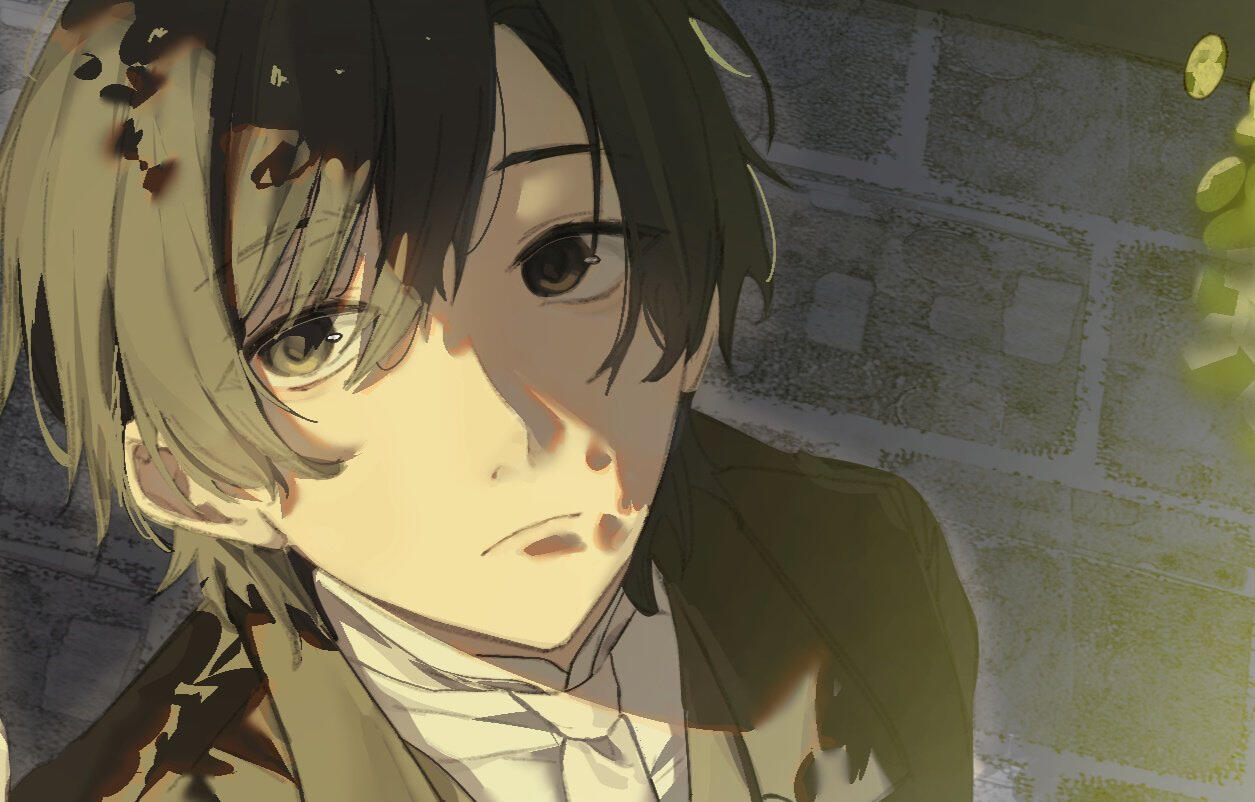
The hard-headed and ambitious supervisor of the Heritage Board who is very watchful of the Bazmut-Praestus Relicari and the questionable provenance of their items.Sandro spends his morning getting worked out over the recent artefacts looting news as he sips his overly sweetened tea and spends his night spying on the Bazmut-Praestus estate.Arsinoe's bare-handed punch has landed on his face more than once. Oh, how he hates it when the spectacled lad calls him Sando, or Sandoro, merely because Noe could not spell out the R in his name.But that ambition is not baseless; he strives to be acknowledged by the main royal household and his father for his own achievemnt, not being a stead for his dead brother. And despite playing the violin often for those high ranking officials in blue, Sandro was often overlooked except by Willem.Being well-educated in the metropole and adept in art, Sandro strives to preserve the culture of his colonized homeland and liberate it through a more subtle means, hence he established the Heritage Board despite being laughed at by some people.Still, he holds certain respect both for Willem and Arsinoe for being willing to respect the people by honoring the ancestors of their land through offerings.He was the first person to figure out Erzebet Haserot's death and later, Mikhail's disappearance. That was the first time he felt a connection to Arsinoe, because he had known what it was like to be in his shoes. Sandro's older brother ran away from royal duties to elope with a foreign scholar, and they were then declared missing after his last correspondence mentioned that they had a daughter of seven years old.Managing the Heritage Board and looking for his illegitimate niece, he finally found her being handed to the fort where Willem Dassein was exiled in.

Herman Willem D.
Perhaps the similarity that connects Willem and Sandro is their great ambitions that are diverse, yet mutually misunderstood. And so he feels for him.A very strict and cold person, they say, governing with an iron arm. Suffice it to say, it was his way of protecting himself. Coming into the colony as a young marshal, bearing the title of governor-general in his early thirties is no easy matter, but a dream helps him settle down.That big dream was establishing a road that connects the whole island as easier means of transportation for the people and for trade. But such a dream required labor, and he had to enforce that upon the people whether he wanted it or not. It is truly ironic that an act that started off as an empathetic thought had to be executed in such a gruesome manner. And so soft-hearted Willem spent his night weeping and reflecting upon the bad deeds he had done.How contrasting to his image as a cold-hearted and unmerciful military marshal who governed the colony. And this matter, he could only confide to Sandro.Even in his exile, when the colony was defeated, Sandro remained his loyal companion, pretending to be the extended hand of the state.

Anunna Dassein
Born to a noble of the house of Inkarno and a respected lady from the metropole, Anunna was taken care of by her uncle whom she refers to as Romo, following her parents' unfortunate passing. Initially unaccepted in society despite his pleas, she was then adopted by Father Herman in his exile, before being sent back to the metropole years prior to his execution.Growing up, Anunna came back to the colony and pledged allegiance to the ruling colonial bureaucracy to atone for Father Herman; thus joined an institution as an anthropologist in the war. Researching and observing how society behaved, she was advantaged by her ancestry of indigenous nobility and metropole gentry, though still very much considered a deviation. Her deep understanding of communities resulted in potent propaganda strategies, and she was expected at every rally.Yet the more time she spends with Zeeveld, a plaguing question surfaces: is this always what she wanted? Has she been doing this merely for acknowledgement, to atone? What does it mean to truly love the things you do, except because it's fun?She admires the overseer because he has a clear motivation behind what he does; duty and the will to keep safe."What do you want to do, Dassein? What do you want for yourself?"What motivation does she have? She is but a tool to atone, both for Romo and Father Herman. The proof that they can set something back onto the right track, even if it's not through their own hands.What does she want to do with her own two hands? Does she ever have dream? Someone who has no expectations of her, but is simply delighted by her presence?Well, sometimes there is delight in chaos. I do not get dragged in chaos, I control it, Anunna thought, as she saw the death around her. She lifts morale, and her words send soldiers and civilians to their doom.The blood on her hand gets even redder as she involves herself in grayer area; illegal arms trade, black market for books, unsurveilled code-talking, historical revisionism.Is it right or wrong? Only the end of the war could determine.What is it that we cannot love from the wreck that is this world?That until she finds herself an anchor, when Dassein is uttered in public, converts into Noentje in hushed rooms, on the tip of his tongue.--------------In the AOT insert, Anunna was Marley's lead propagandist and state anthropologist studying its colonized regions, who secretly served as intel for the Mid-East Alliance. Handling propaganda materials and psychological weapon research in Fort Salta, she was in charge of doing historical revisionism on history books for the Eldians in Liberio.Following the execution of his father, a high-ranking Marleyan who allegedly helped Eldian restorationists, Anunna fled to Paradis and assumed the identity of Noun Cercato, a humble history and geography teacher. Yet a propagandist at heart, she became the subject of the military police's questioning, and later, ended up imprisoned, waiting for the death row. Hange later bailed her out, offering her to join the Survey Corps and assist her in research along with Moblit.

Albrecht H. Zeeveld
The quartermaster in charge of the kazerne orderlies. Overseer Zeeveld, the way they call him. It is agreed upon that his eyes and ears are everywhere; as if the barracks walls are sentient and constantly on the watch under his order.Despite being strict and rigid, he has a flair for the dramatic. He would not stop talking once he started, not until he found an exasperating topic that made him throw his pith helmet into the river.There is an air of secrecy around him. Some believe that he keeps something hidden within the kazerne bunker; something behind one door in cipher room only he has the key to.The colonial administration employs Anunna Dassein as state anthropologist under Zeeveld's command, as his new barracks were recently established within a fort in a new area and received a batch of enlisted locals; an effort to integrate the colony's military power and gain local support.He put her in charge of studying the soldiers' morale, the communities' engagement with them, and methods of keeping things in order without crossing the boundaries due to cultural differences. The research they gained, however, would later be utilized by the colonial government as a propaganda tool, to which Anunna would later be their lead propagandist.Zeeveld has always been righteous in the most questionable way, through his own obsessive, twisted side. What Anunna considers a gray area, he would make her determine the white and black. She often complains because he puts things in boxes; then in such a manner, she said, you are a murder machine.Whether I am a murder machine or not, my main job and duty is to protect. I was built to become a stronghold. That's the only motive that matters, he would reply, to his defense."Then outside of duty, what do you want for yourself, Overseer Zeeveld?"Then he realized that his sole motivation has, indeed, always been duty. Does he ever have something that is truly his? Someone for whom he does not have to serve, but simply be present?And because he has always been righteous in the most questionable way, deep inside, he is strongly against Anunna being a propagandist because he thinks she lies; silently sabotaging her works and rallies that do not favor him.That until he realizes that he is not doing it for right or wrong. When Zeeveld turns into Brecht, whispered warmly on the tip of her tongue, unlike those blatant lies that send soldiers to their demise.for good or for evil, in the superlative degree of comparison only.